Financial distress, such as sudden job loss or a medical emergency, can leave you scrambling for funds and overspend your credit card balances. Unless repaid in due time, this can further accrue interest and penalty charges and push you further into credit card debt. This is why building an emergency fund is a simple yet necessary measure to avoid the accumulation of credit card debt during such times.
With the end of the year just around the corner, building an emergency fund should be one of your New Year’s resolutions for 2026. In this blog, we will discuss useful tips to help you build an emergency fund and escape the vicious cycle of credit card debt.
How to Build a 6 Month Emergency Fund for 2026
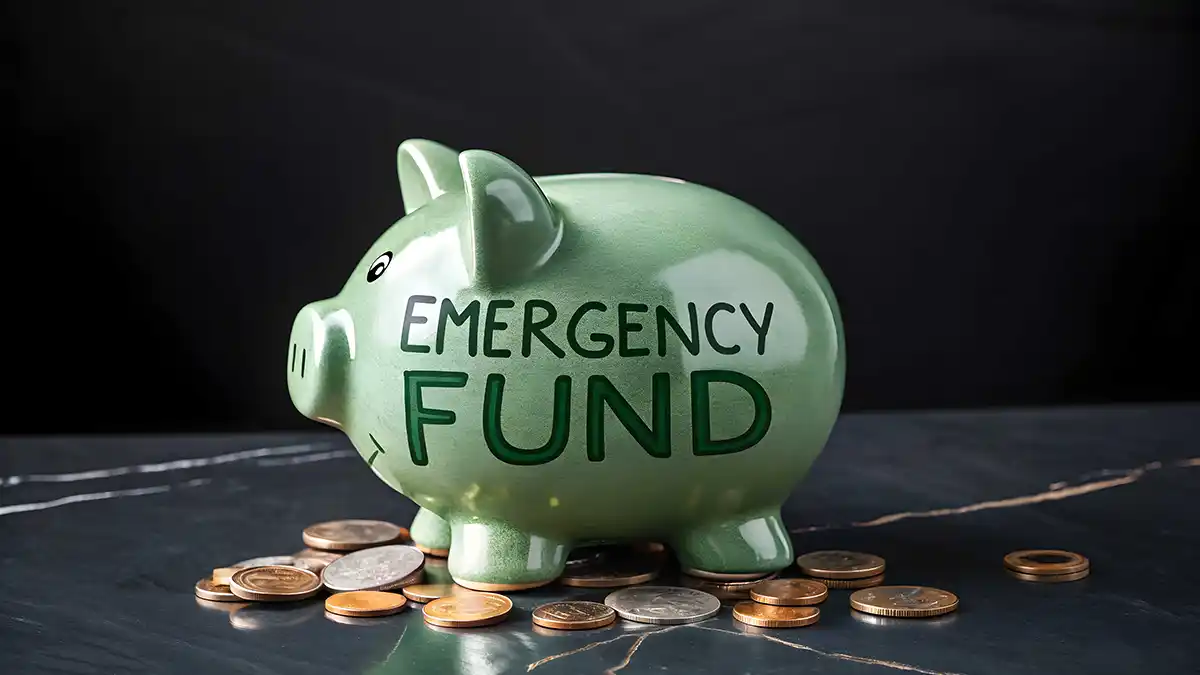
With to an emergency fund, you'll be better equipped to handle the unexpected financial twists life throws at you. You’ll not have to resort to your credit card during times of emergency, such as job loss.
Here are some practical tips to help you build a solid emergency fund to sustain you for 6 months.
1. Estimate a Target Amount
The first step to building an emergency fund is to estimate your target budget. This will usually be around six times your current monthly expenses.
- Calculate your total monthly recurring expenses, such as rent, utility bills, groceries, essential medicines, EMIs, transportation/commute costs, etc.
- Do not calculate unessential expenses such as dining out, recreational activities, subscriptions or any unessential shopping expenses.
- Multiply this monthly total with 6 to get your estimated target amount. For example, if your monthly essential expenses amount to ₹30,000, your 6-month emergency fund must be 1.8 Lakhs.
2. Develop a Savings Habit
Building a habit of saving as much as you can from your disposable income is inevitable for putting together an emergency fund as fast as possible.
- The first step is to cut out unnecessary expenses. Identify all the non-essential areas where you have recurring expenses and cut them off till you achieve your target emergency fund value in 2026.
- If you have any credit card debt, focus on paying them off fast and increase your disposable income. Reducing credit utilisation can also help improve your credit score and overall credit profile.
- Create a fool-proof system for consistent contributions with automated savings through automatic transfers, setting aside a fixed amount regularly, etc.
Also Read: Major Benefits of Using Personal Loan to Pay Credit Card Debt
3. Track Your Cash Flow
Keeping track of your cash flow can prove to be crucial for financial stability in the long run. You may be living paycheck to paycheck or trying to overcome an overspending habit. In either case, prioritising this as a key step can make a huge difference in taking control of your finances.
- Track the timing of your income and expenses to avoid shortfalls. This will also help detect opportunities to save.
- Upon monitoring where your cash goes, you can adjust your spending habits, negotiate due dates for bills with your creditors, etc.
- Mindfully allocate surplus funds towards your savings.
4. Automate Your Savings System
By automating your savings, you can simplify achieving consistency. This strategy is perfect for anyone with a steady income source. It can be adjusted according to the changes in your financial situation.
- Set up recurring transfers to your savings account, settling on the amount/frequency which suits your goals. Thus, ensure hassle-free and consistent contributions,
- Stay updated on your balances to prevent overdraft charges from piling up.
- Set up notifications/reminders to stay on track and on top of your accounts.
5. Boost Your Income Sources
If you want to achieve your target emergency fund faster, augmenting your income levels with multiple income sources can help. Easier said than done, alternatively, you can also leverage one-time lumpsum income such as incentives or performance bonuses to reach your target faster. This strategy is valuable to individuals with irregular income, as it smooths out financial inconsistencies, ultimately helping make progress towards long-term goals.
- When you receive unexpected funds, like cash gifts or tax refunds, allocate a significant portion towards your emergency fund.
- Avoid splitting the amount on fleeting expenses and let your money work for your future.
6. Choose Your Savings Account Wisely
Remember that returns on investment are never an objective when you’re building an emergency fund.
- Choose a safe, but liquid instrument to store your funds. Returns should not be your priority for this fund.
- Explore money market funds as well as low/moderate risk savings accounts that can be liquidated in times of emergency and give you some interest earnings.
- Stay away from volatile instruments such as investing in stocks or long-term commitments such as SIPs.
To Conclude
If you’re using a credit card but do not have an emergency fund, then building one should be your first step toward financial security during the upcoming year. This is because, in times of emergency, without a backup fund, you’ll be forced to use your credit card balance. Failure of timely repayment inevitably pushes you into credit card debt.
You can also apply for an Instant Personal Loan from Poonawalla Fincorp with a good credit score to avail instant approval for emergency funds up to ₹5 Lakhs, so you don’t have to wait or expend your emergency fund. Explore more on the official website and apply now.
FAQs
What is an emergency fund example to follow?
An emergency fund can be a savings account which covers 3-6 months of living expenses, including groceries, rent, utilities, and other essentials and can support you in times of financial distress.
What are some emergency fund tips for someone who shops too often?
You can use the 50/30/20 rule. This means 50% for important things, 30% for discretionary spending (including shopping), and 20% for savings/debt repayment. Keep a reasonable percentage of your income aside for your shopping sprees. But remember to limit yourself to that budget.
What are the budgeting tips to escape credit card debt in 2026?
Pay off your high-interest debts first and then consolidate the loans. Allocate 50% of your income towards necessities while setting aside 20% for debt repayment/savings. The key to budgeting is staying consistent with what you decided on previously.
Are paying Personal Loan interest rates actually better than credit card debt?
Usually, Personal Loan interest rates are much lower and way more manageable than credit card debt. This makes it beneficial for one to opt for a Personal Loan to consolidate and pay off their high-interest credit card debt. Personal loans also simplify payments and help save money on interest.
How to apply for an Instant Personal Loan for emergency situations?
With Poonawalla Fincorp, you can opt for an Instant Personal Loan up to ₹5 Lakhs by clicking on 'Apply Now' on the official website. Fill in the form and make sure to upload all the necessary documents before submitting.
We take utmost care to provide information based on internal data and reliable sources. However, this article and associated web pages provide generic information for reference purposes only. Readers must make an informed decision by reviewing the products offered and the terms and conditions. Loan disbursal is at the sole discretion of Poonawalla Fincorp.
*Terms and Conditions apply